I quit coffee in 2023 because it was making me sick. Three years later I’m pulling shots at home every morning, weighing everything, and keeping a log of every bag I buy. This is the whole thing written down: the machine that put me off coffee, the year I spent buying it instead of making it, the moka pot phase, the setup I settled on, the two weeks where my coffee got worse before it got better, and what a year of logging bags taught me about my own taste.
It’s mostly here so I can remember it, and I plan to update it once a year, so what you’re reading is where things stand in 2026. If you’re somewhere in the same process, the parts about pressure, grind and ratio are the ones worth your time. Skip ahead, I won’t know.
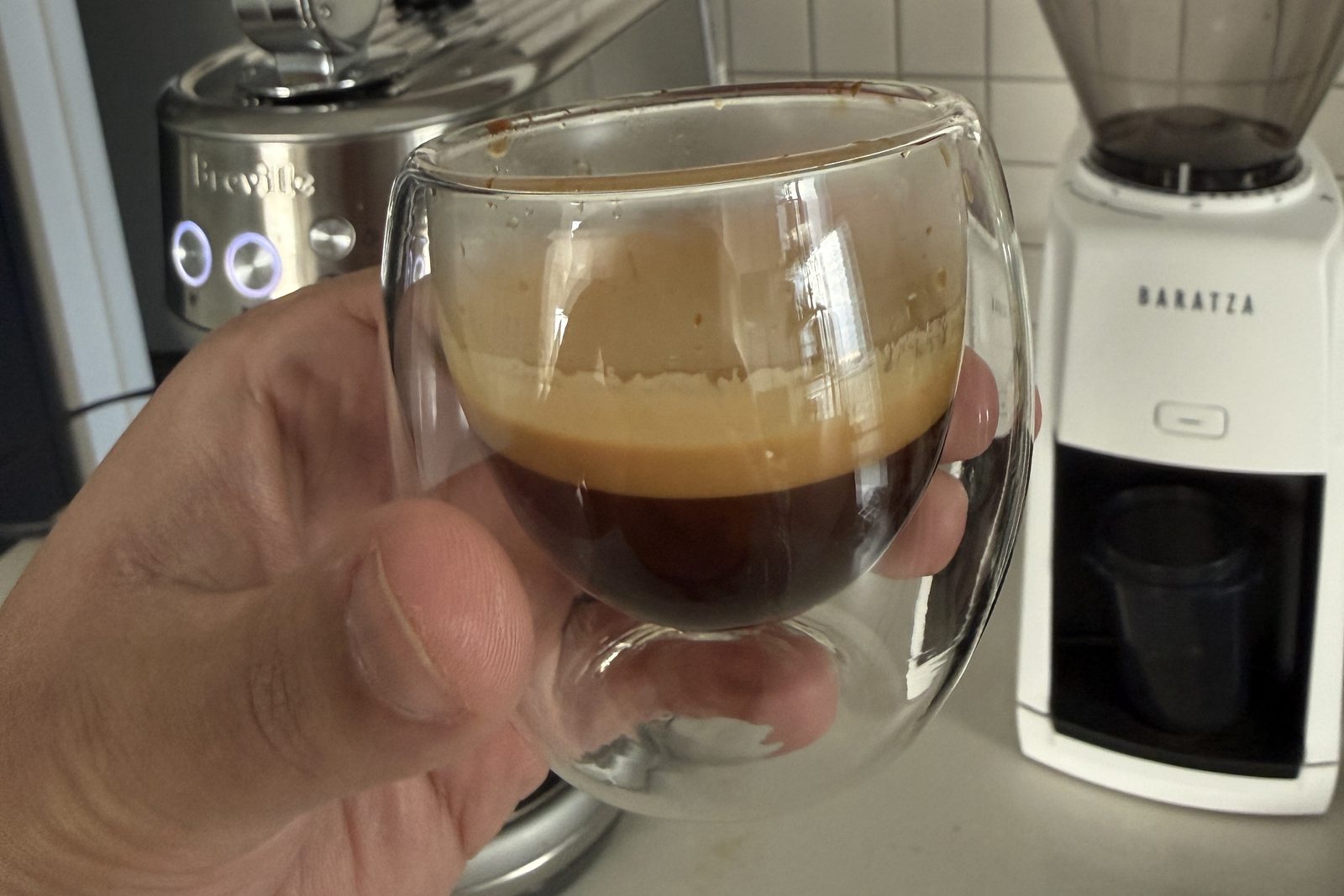
The machine that made me quit
I wanted to make espresso back in 2023. I looked into it for about an hour, decided the process was more complicated than I wanted my mornings to be, and stuck with the cheap drip machine I already had. It felt like a sensible decision at the time.
Because that machine is why I stopped drinking coffee. I’d have a cup and feel sick afterwards, and it happened often enough that I decided the problem was coffee. It wasn’t. The machine had years of mineral build up inside it, and I wouldn’t be surprised if there was mould in there too. I never descaled it, barely cleaned it, and left the reservoir sitting full between uses, which in hindsight is a sentence I should have caught myself saying at the time.
So if you take one thing from this post, take that one. An unclean drip machine isn’t neutral. It gets worse while you keep drinking out of it, and you’ll blame the coffee.
A year of buying it instead of making it
Through 2024 I just bought coffee. McDonald’s first, because it’s cheap and it’s the same every time. Then Starbucks, which is where I noticed I actually had preferences and not just a caffeine habit.
Useful year, in hindsight. I worked out what I liked before spending anything on gear, which is not usually the order these things happen in.
The moka pot, and why it is not espresso
My way back in was a Bialetti and a bag of Lavazza ground coffee, which cost me almost nothing. The ritual is genuinely good: fill the base, screw it together, listen for it, pull it off before it sputters.
What bugged me is that it isn’t espresso, and I say that as someone who liked using it. Espresso is defined by pressure. A real machine pushes water through the coffee at around nine bars, which is nine times atmospheric pressure. A moka pot works on steam pressure and gets to roughly one and a half to two bars.
That gap is the whole thing. At nine bars you emulsify the oils in the coffee and force gas into the liquid, which is what gives you crema and that thick texture. At two bars you get strong concentrated coffee, which is fine, but it’s a different drink and no bean is going to fix it for you.
The setup, and what each part does
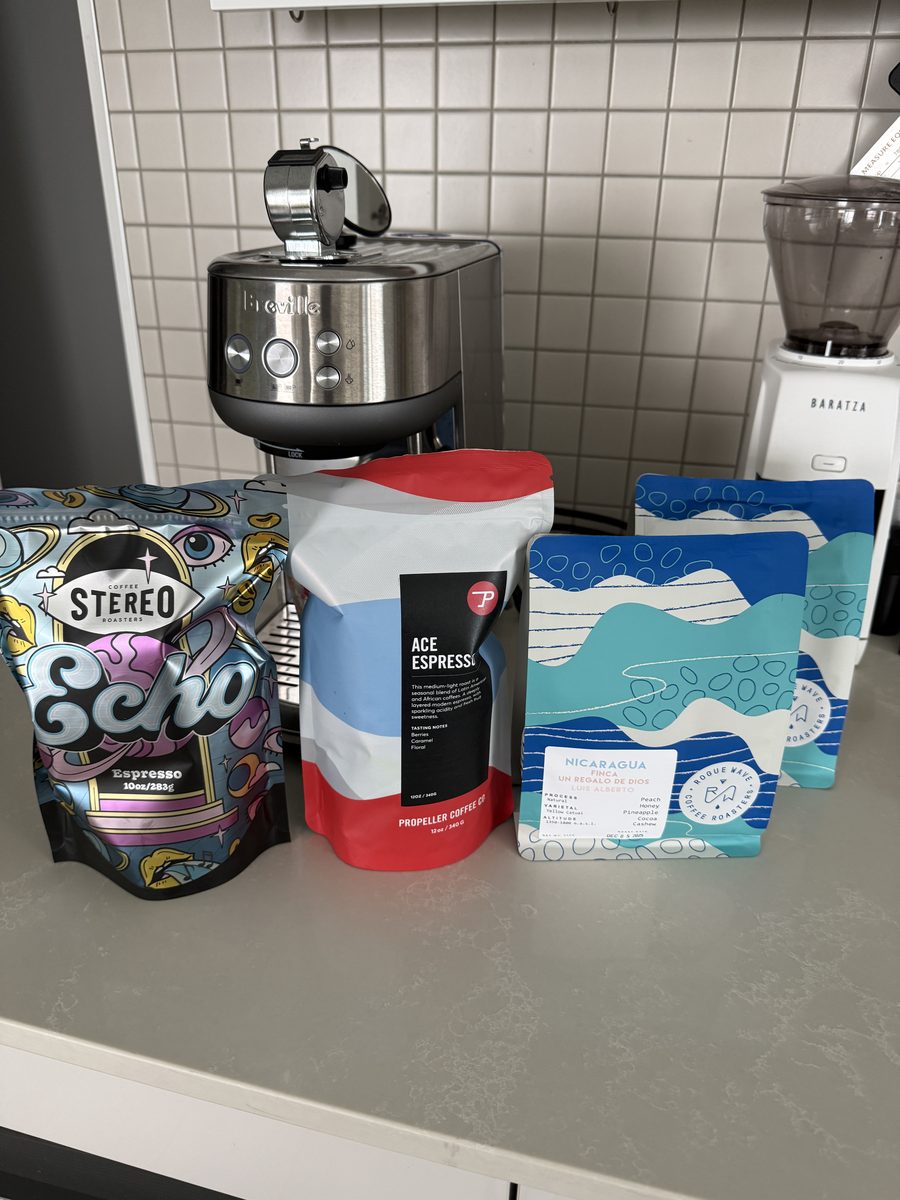
This time I did the research properly, and I bought a Breville Bambino with a Baratza Encore ESP grinder.
The machine. The Bambino is the standard recommendation for a first serious home machine, and it earns it. It uses a thermojet heater, so it’s ready in a few seconds instead of the fifteen or twenty minutes a boiler machine needs, which matters more than it sounds like it should when you’re making coffee on a weekday. It takes a 54mm portafilter, runs a proper nine bar pump, and does a short pre-infusion where it wets the puck at low pressure before ramping up. It also has a steam wand that I have never once used, because I drink everything straight.
The grinder. The Encore ESP is a conical burr grinder. Burrs matter because they cut the beans to a roughly even size, where a blade grinder smashes them into a mix of dust and chunks, and evenness is most of what a good shot depends on. The ESP part matters too. The standard Encore is built for filter coffee, and its adjustment steps at the fine end are coarse enough that you land either side of where you want to be with nothing in between. The ESP is the same grinder with much finer steps down at the espresso end, plus a 54mm dosing cup that catches the grounds and drops straight into the basket.
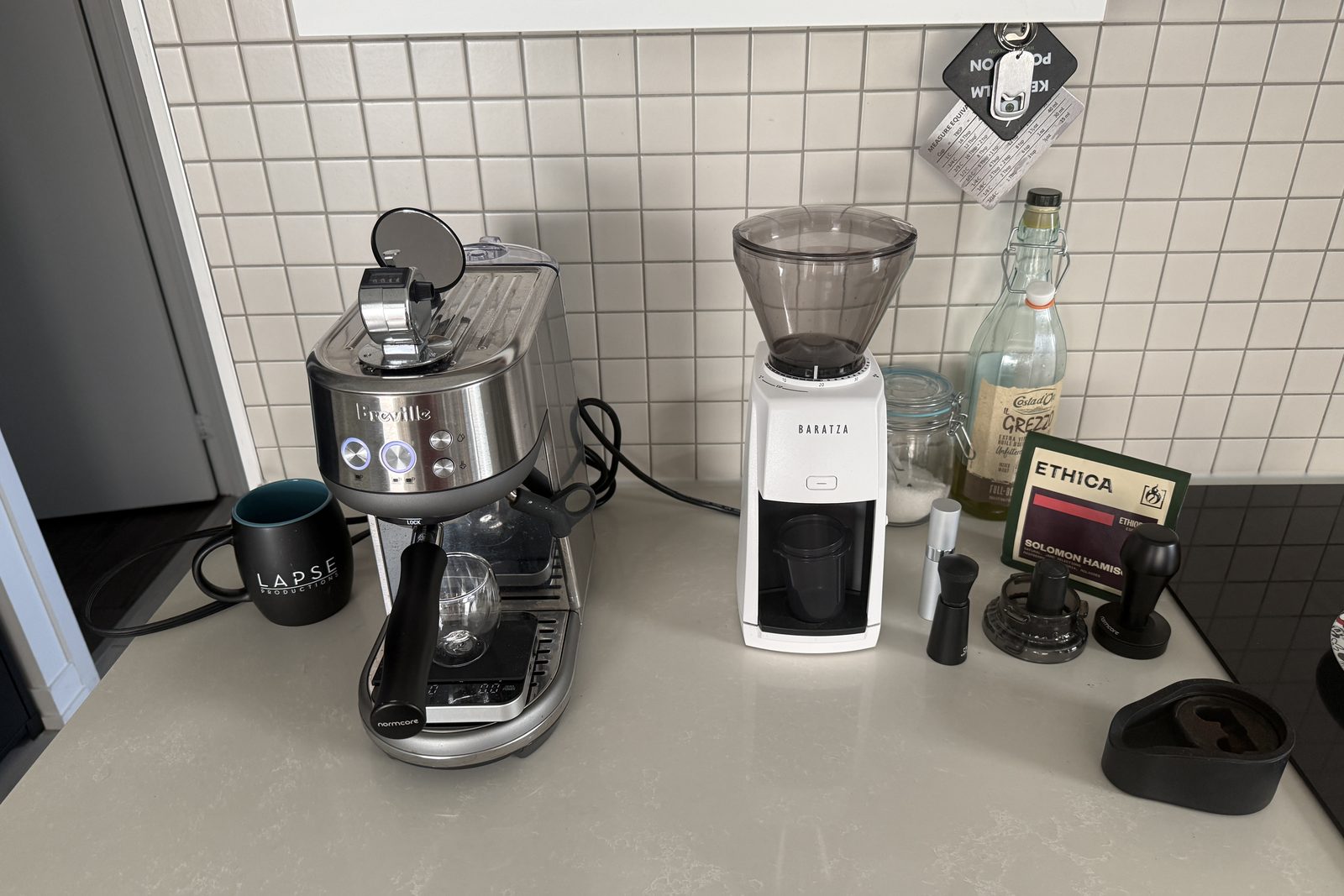
Mine is on its second unit. The first one, in white, failed and was replaced under warranty with the black version. Same grinder, and I mention it because a machine breaking inside the first year is the kind of thing you want to know before you buy, not after.
One more thing, plainly: the grinder mattered more than the machine. If you’re choosing where to put your money, put it there.
Three cheap tools that changed more than they should have
The WDT tool. WDT stands for Weiss Distribution Technique, which is a grand name for a handle with a few thin needles in it. You stir the grounds in the basket before you tamp. Here’s why it works: grinding builds up static, the coffee comes out in clumps, and a clump is a dense spot the water has to fight through. Water is lazy. It finds the easiest path, runs through the loose side, barely touches the dense side, and hands you a shot that’s somehow bitter and sour at the same time. Thirty seconds of stirring removes that problem almost entirely.
The Normcore tamper. It’s spring loaded, so you push down until it clicks and stops. It came with three springs, 15, 25 and 30 pounds, and I’ve only ever used the one it shipped with. The force isn’t really the point. Beyond a certain pressure the puck is as compacted as it’s going to get, and the nine bars of water arriving a second later compresses it anyway.
The point is that it’s the same every time, and that it lands level. Those two things are what kill channelling. Tamp slightly harder on Tuesday than you did on Monday and your grind setting is now wrong for a reason that has nothing to do with the grind, and you’ll chase it for a week wondering what you changed. The tamper takes one variable off the table permanently, which is the whole game when you’re trying to work out what everything else is doing.
The tamping station. A small stand that holds the portafilter level while you tamp. It sounds like the most skippable thing on this list, and it isn’t. Tamping against the edge of a counter means the portafilter tilts, so you compact one side harder than the other, and then the water runs through the soft side. The stand holds it flat and frees both hands, which is the difference between a level puck and one that only looks level from above.
All three together cost less than the grinder did, and between them they removed most of the things that were going wrong.
Weighing everything: 18 in, 36 out
The other thing that turned this from guessing into a process was a scale.
I pull what people call a 2:1 ratio: 18 grams of coffee in the basket, 36 grams of liquid espresso out of it, in roughly 25 to 30 seconds. That’s the standard starting point for a modern shot, and it’s a ratio rather than a volume for a good reason. Crema makes volume a liar. Two shots that look identical in the cup can be twenty percent apart in actual liquid, because one has a thick head of foam on it and the other doesn’t. The scale doesn’t care what it looks like.
Once the dose and the output are fixed, time stops being a target and becomes a reading. If 18 in and 36 out takes 18 seconds, the grind is too coarse and the water is running straight through. If it takes 45, it’s too fine and the puck is choking. You’re not chasing a stopwatch, you’re using it to tell you which way to move the grinder.
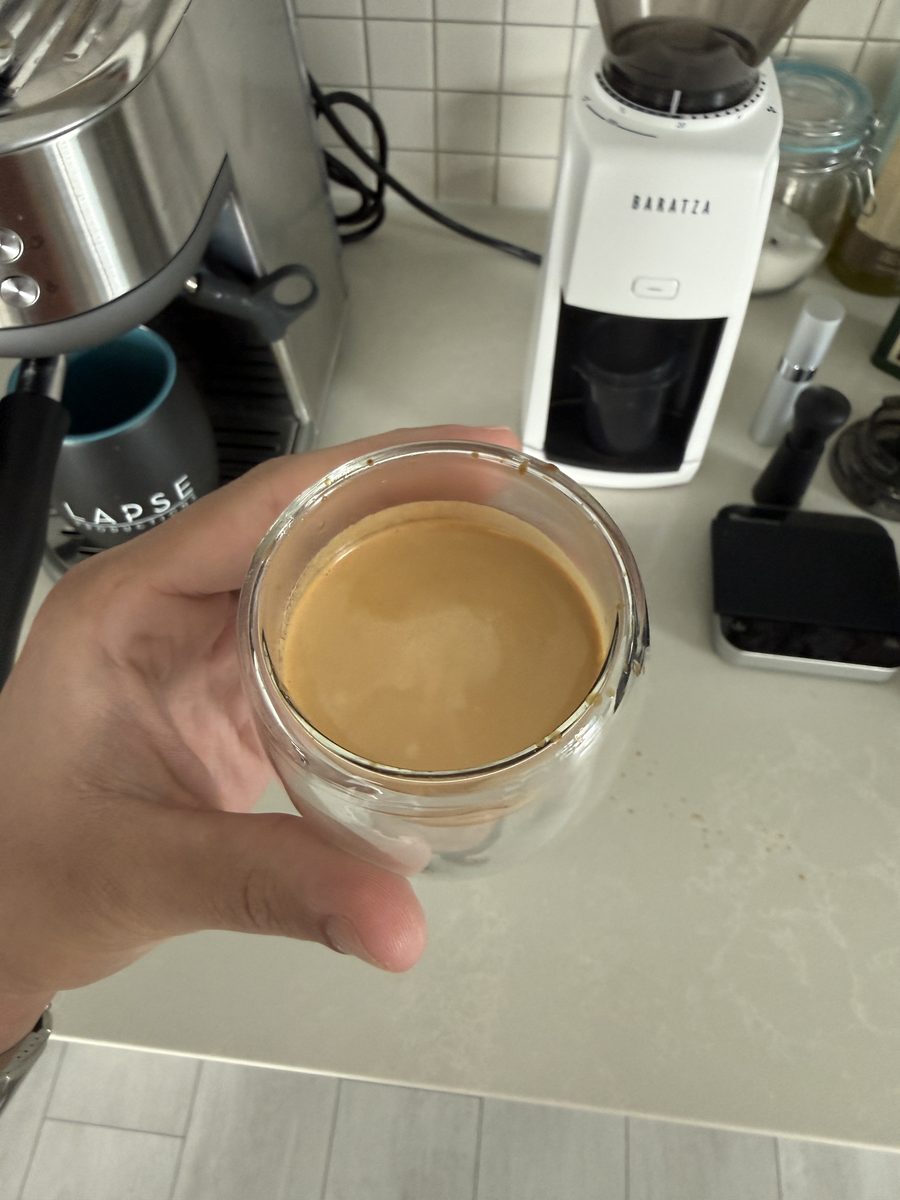
That’s the part nobody told me clearly. The numbers aren’t the point. They’re what lets you change one thing and know what changed.
The bottomless portafilter, and two weeks of worse coffee
I ran everything stock for months and was perfectly happy. Then I decided I wanted to dial shots in rather than accept whatever came out, so I bought a bottomless portafilter.
A normal portafilter has a spout underneath that collects everything and pours a tidy stream, which very politely hides what happened inside. A bottomless one has no spout and no base. You see the underside of the basket, and the coffee comes out in front of you.
It’s a diagnostic tool sold as an accessory. A good shot starts in a few separate streams that join into one thick rope in the middle. A bad one sprays sideways, or fires a jet out of one spot, or goes pale and fast on one side. That’s channelling, and the spout had been hiding it from me for months.
So for a week or two my coffee got worse, because now I could see every problem I’d been cheerfully drinking. Then it clicked, and the whole thing collapsed into the line everyone on the internet repeats: grind finer if the shot runs too fast, grind coarser if it chokes. Keep the dose and the ratio the same, change one thing at a time, and taste after each change.
That’s the entire skill. It took me two weeks of bad shots to believe something I had already read twenty times.
What I actually drank
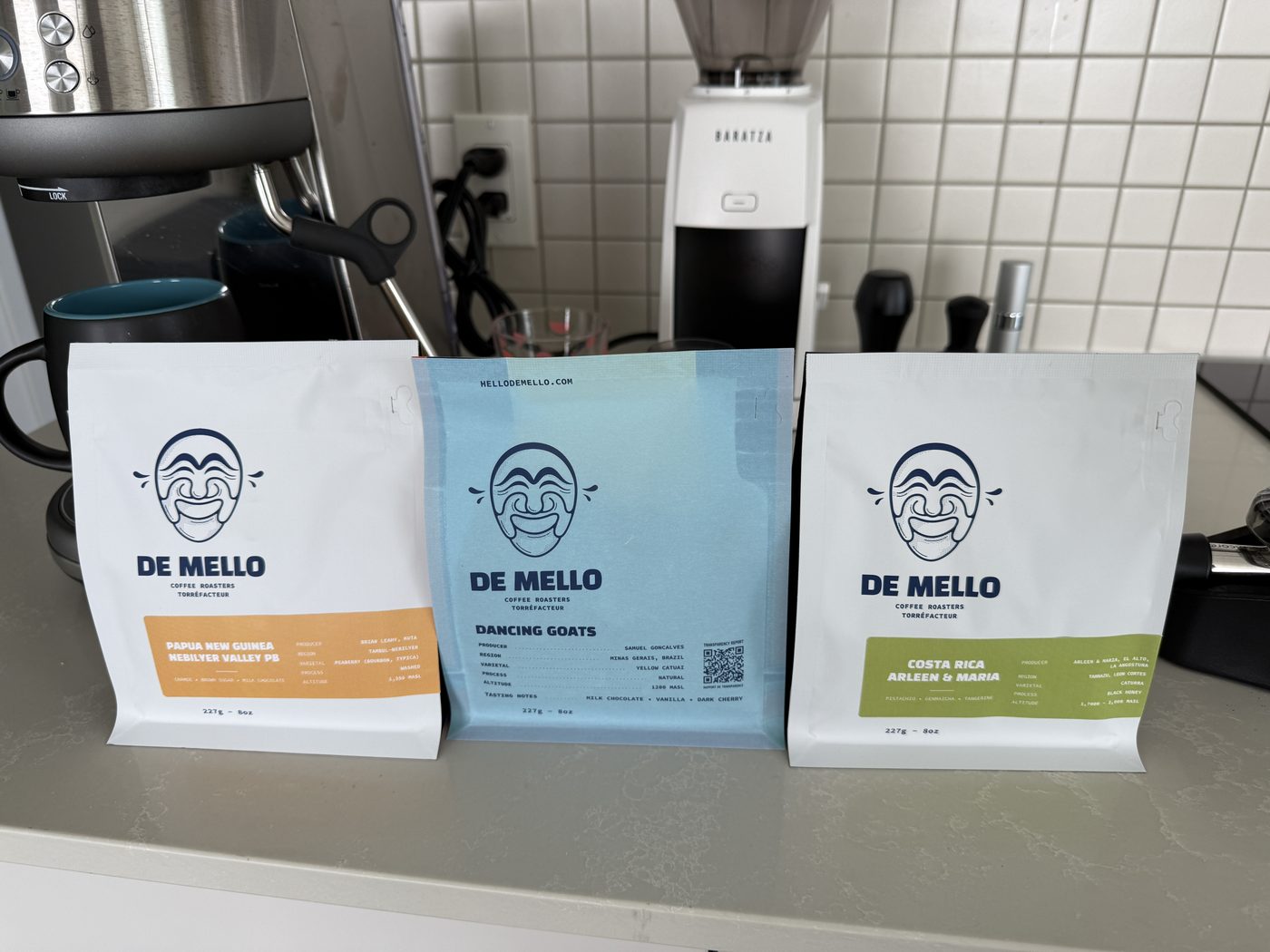
Once the shots were consistent, the only thing left to change was the bean, so I started logging every bag: roaster, origin, process, what the bag claimed it tasted like, and what I paid. Twenty one bags so far, from nine roasters, between August 2025 and the summer of 2026. Twelve blends, nine single origins, about four hundred dollars, and an average of twenty one dollars a bag.
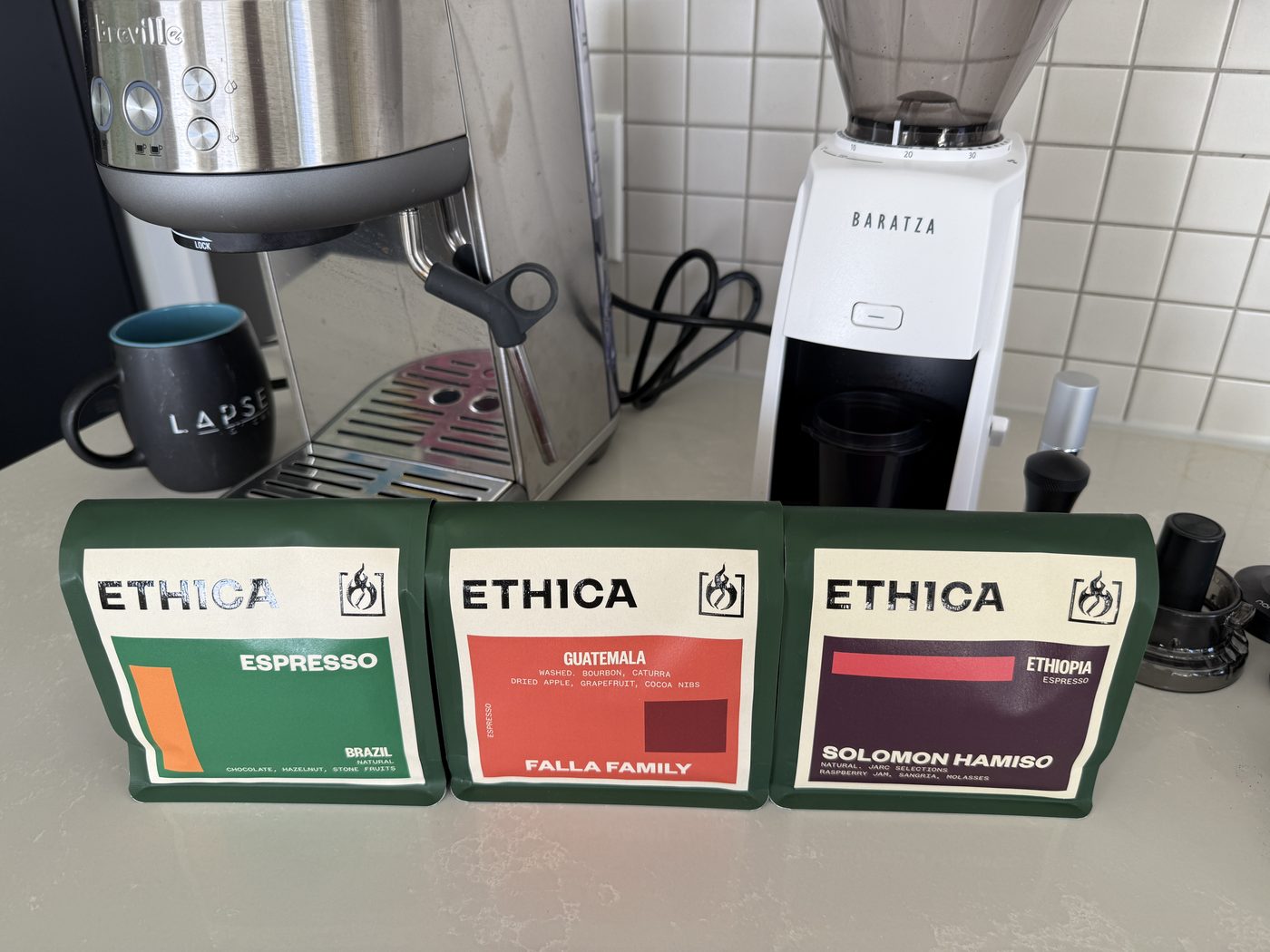
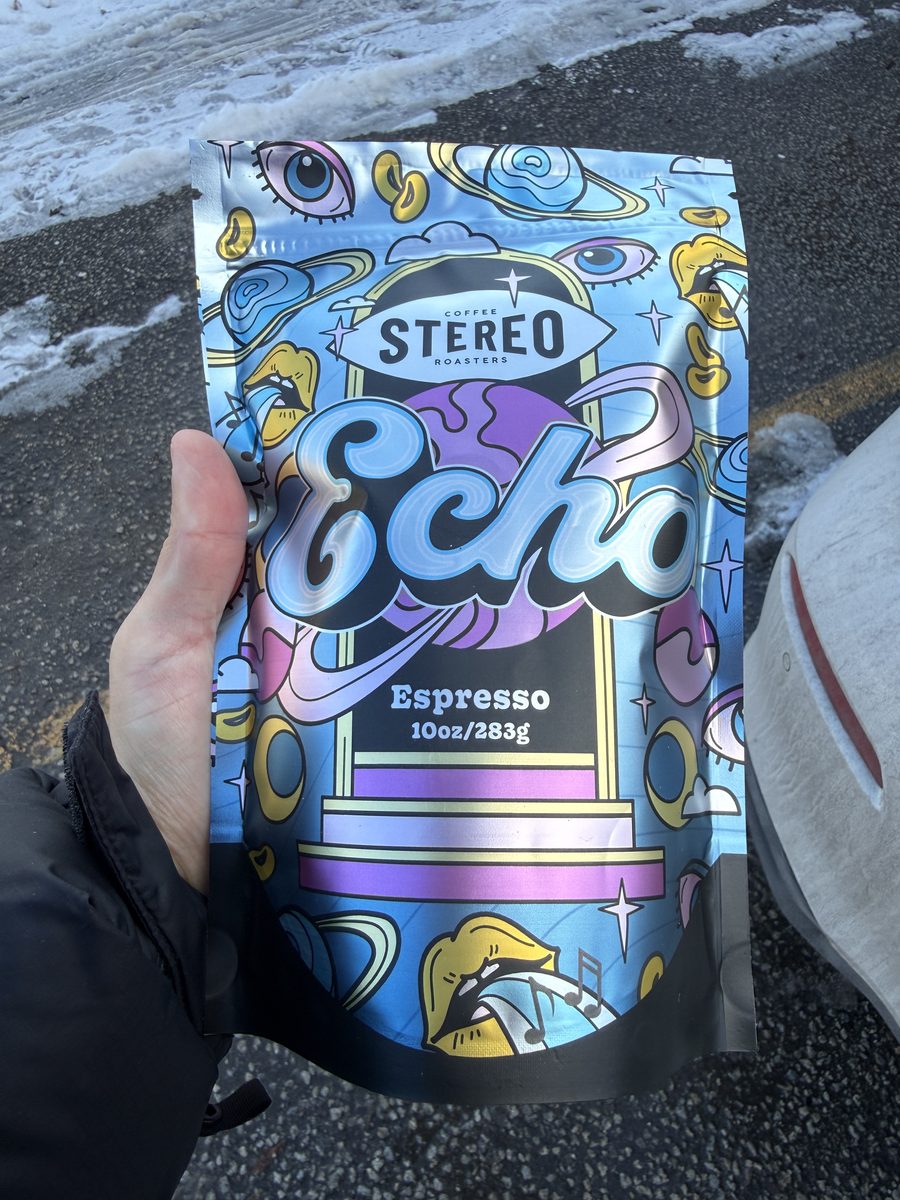
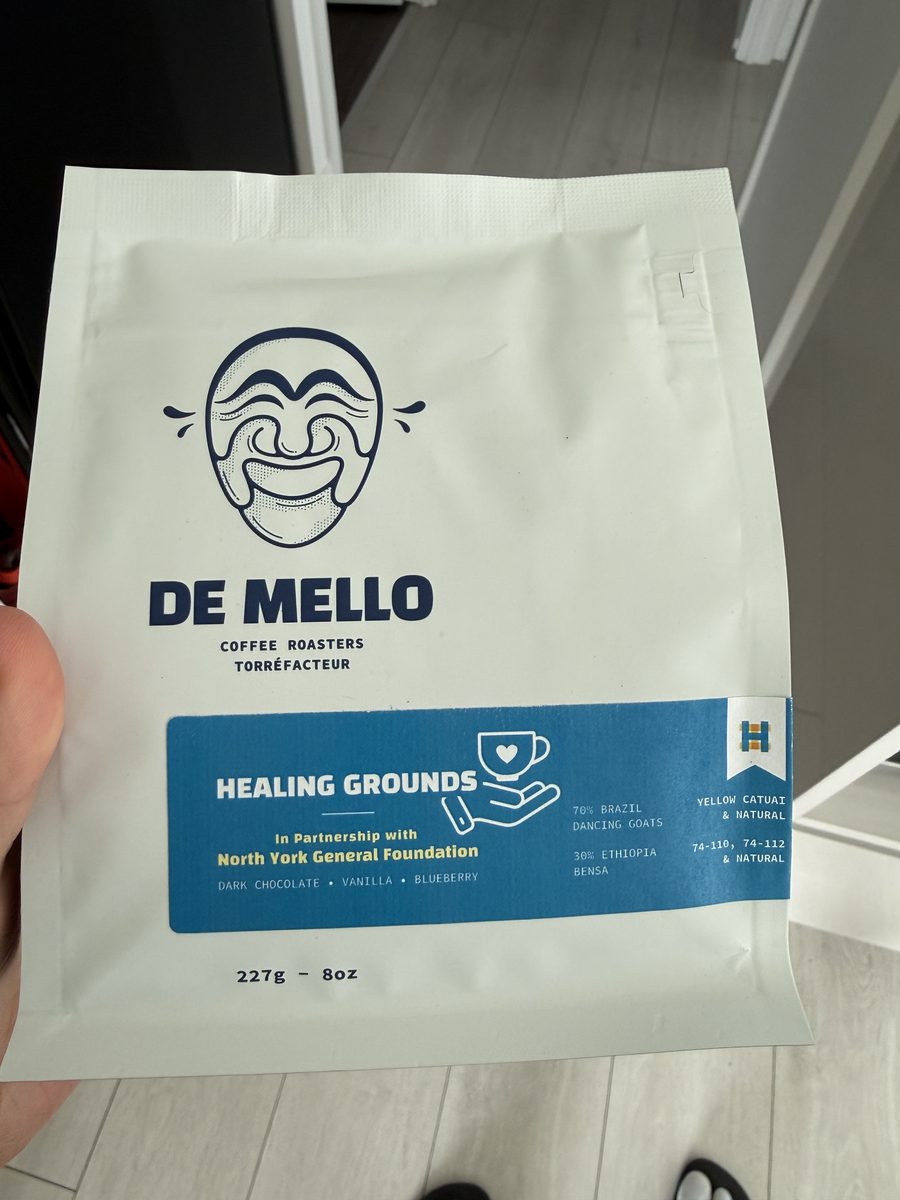
Toronto. Thirteen of the twenty one came from here, which says more about proximity than taste. De Mello and Ethica account for ten between them. De Mello’s Dancing Goats, a natural Brazilian house espresso, is the one I kept going back to, along with Ethica’s Guatemala Falla Family. I also worked through De Mello’s Costa Rica, their Papua New Guinea peaberry, their charity blend and their dark roast, Ethica’s house espresso, their Ethiopia and their Colombian La Macarena, plus Stereo’s Echo, Propeller’s Ace Espresso and Hale’s house blend.
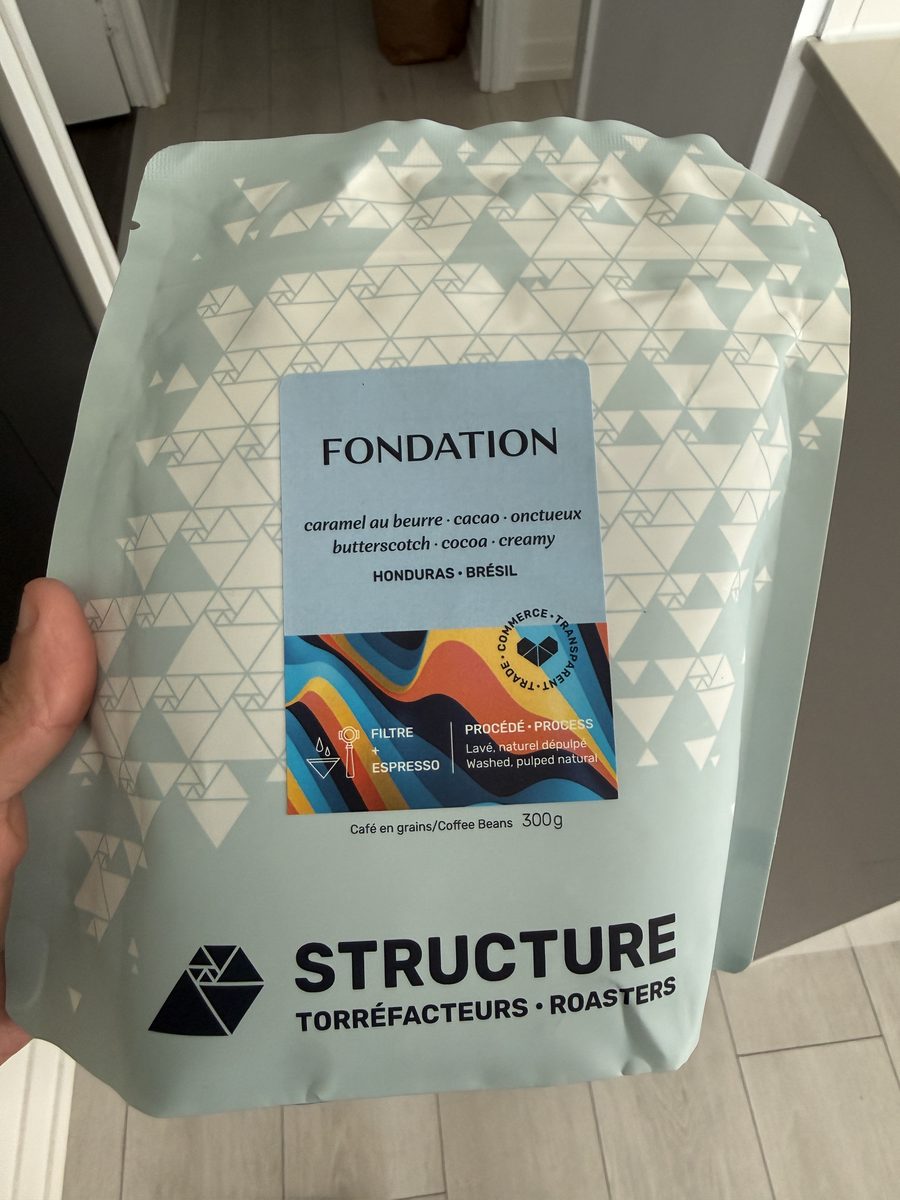
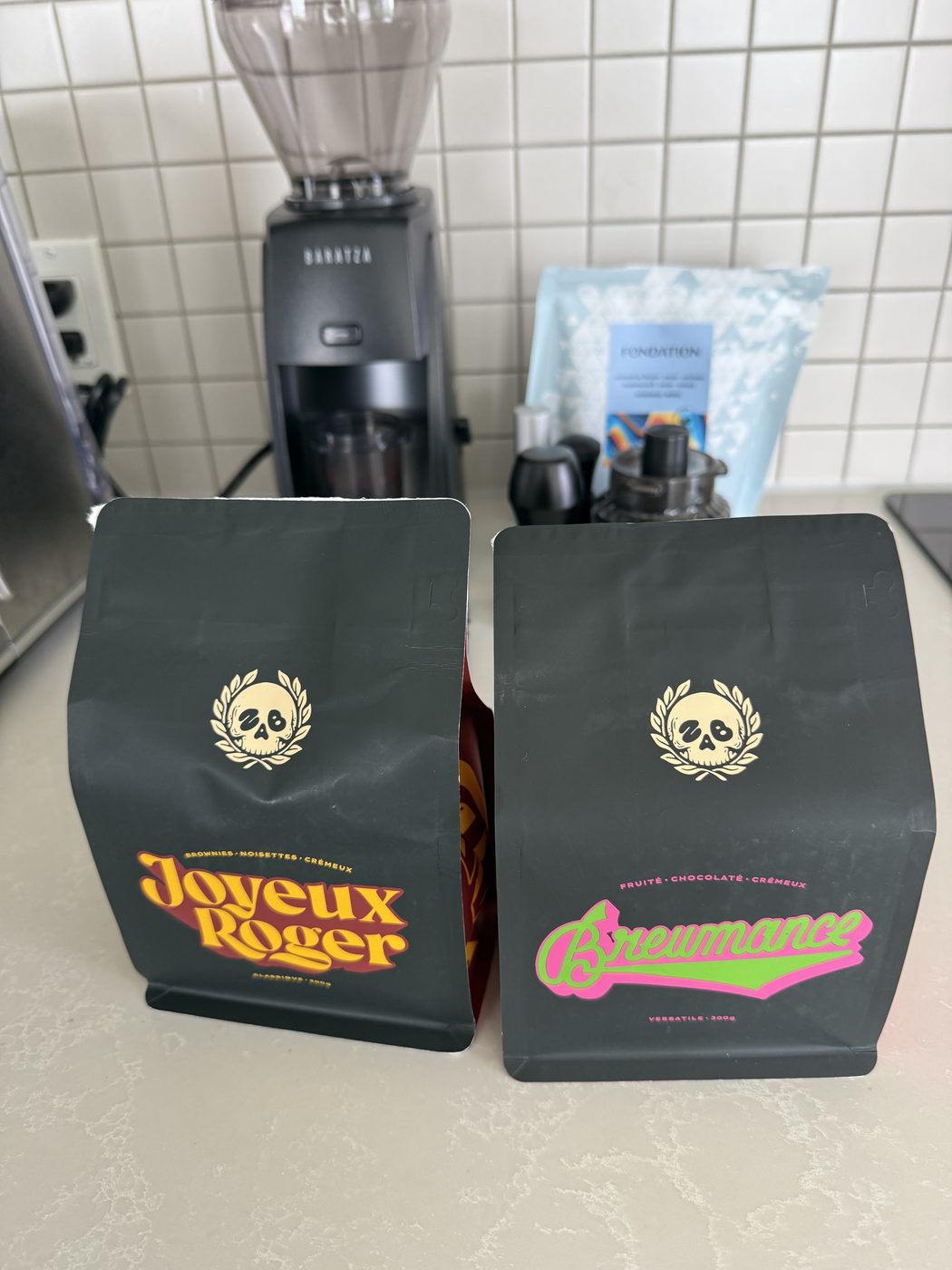
Quebec. Four bags, and the best run of the year. Structure Torréfacteurs out of Montreal makes a blend called Fondation, Honduras and Brazil, washed and pulped natural, with butterscotch and cocoa on the bag and exactly that in the cup. It’s the reference coffee for me now, the one I compare things to. Their 1852 was good as well, and a darker roast than I usually reach for. Zab Café gave me Joyeux Roger and Bromance, both of which I’d buy again.
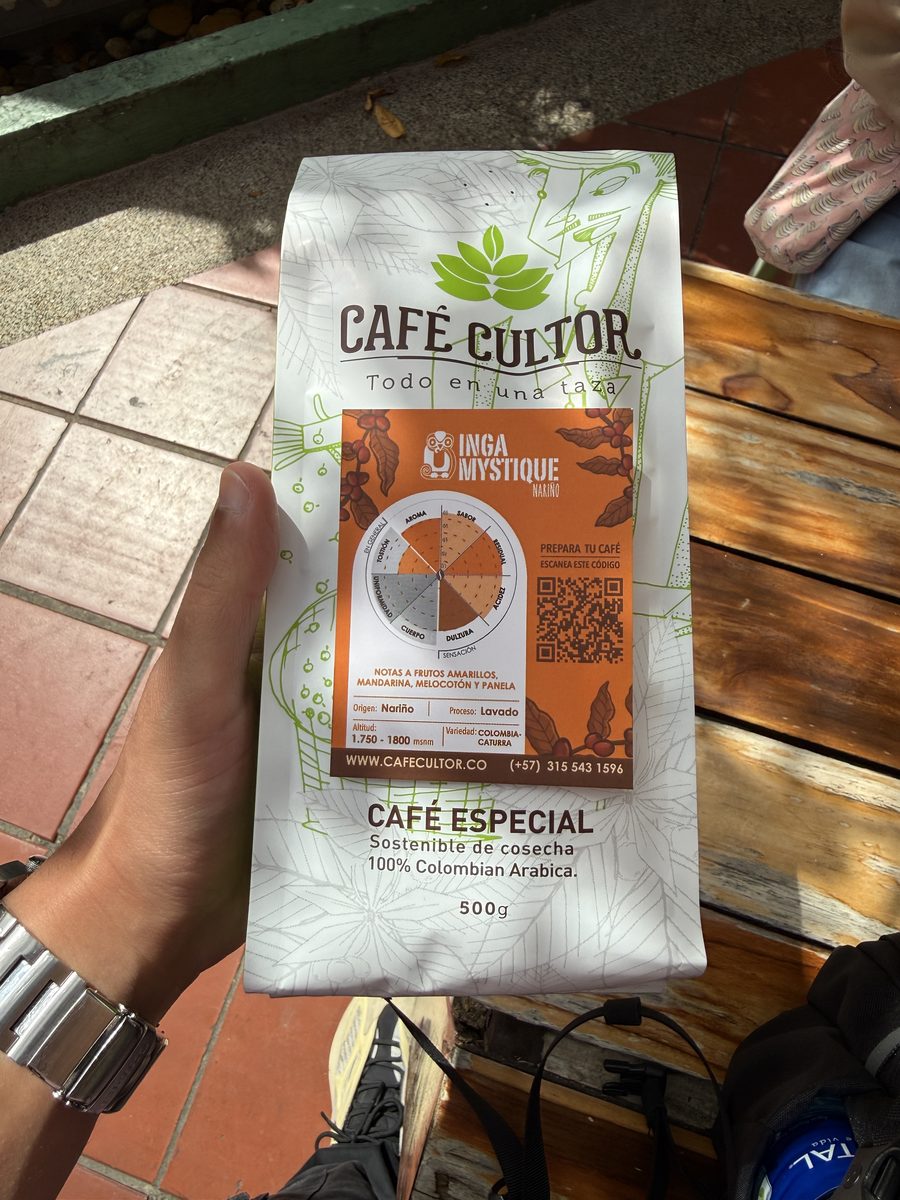
Further out. Rogue Wave in Edmonton ships free and sends farm named single origins. Their natural Nicaragua and washed Guatemala were the two standouts of the whole year, and they were also the cheapest per gram of anything I bought, which is the sort of result that makes a spreadsheet worth keeping. I picked up a bag of Café Cultor in Bogotá, which held up.
The one category I’m finished with is the seasonal gift blend. Whatever a roaster puts out for the holidays is not aimed at someone pulling a straight double at seven in the morning.
What origin and process actually mean
Two words on those bags took me a while to understand, so here they are in plain terms.
Origin is where the coffee grew: the country, and often the region or the farm. It matters because altitude, climate, soil and the variety of the plant all change how the bean tastes before anyone has roasted it. Central and South American coffees tend to land in chocolate, caramel, nut and brown sugar. East African coffees, Ethiopia and Kenya especially, tend to land in berries, citrus, florals and tea. Neither one is better. They’re different drinks, and you’re allowed to prefer one.
Process is what happened to the cherry after picking, because coffee is a seed inside a fruit and that fruit has to come off somehow. Washed means the fruit is stripped and the seed is fermented and rinsed clean before drying, which gives you a clearer cup where the origin comes through. Natural means the whole cherry is dried with the fruit still on, so the seed sits in its own sugars for weeks, which gives you heavier, fruitier, sometimes boozy coffee. Honey, or pulped natural, sits in between: skin off, some of the sticky layer left on.
The patterns in a year of bags
Writing it all down was the point, and a year in there are patterns I’d never have noticed otherwise.
- I have an origin, and it’s Central America. Guatemala, Honduras, Nicaragua, plus the Brazilian and Colombian components in blends. When the bag says chocolate, caramel, nut, molasses or butterscotch, I’m going to like it. When it says floral, berry, tea like or tropical, I’m not, and the Ethiopians have all landed in that second group for me.
- Washed suits me more than natural. Roughly even numbers of each in the log, and the washed ones are consistently the ones I finish and think about afterwards. Some of that is probably me, since light naturals are the hardest thing to dial in on this setup, and a bad shot of one tastes sour rather than fruity.
- Price predicts nothing. The cheapest coffee per gram I bought all year, at about six dollars per hundred grams, was also the best. The most expensive, at over nine, was ordinary. Bags between twenty and twenty three dollars at 300 grams or more have been the sweet spot.
- Blend or single origin tells you nothing either. Twelve blends, nine single origins, and my favourite of the year is a blend. The useful words on a bag are the origin and the process, not the category.
- Convenience decides more than taste does. Thirteen of twenty one bags came from Toronto and ten from two shops, not because they were the best but because they were nearby. The ones I’d order again are all from further away. That’s worth knowing about myself.
- Roasters’ milk advice is not for me. Two of the coffees I like best are sold as being built for lattes. I drink everything straight in a double walled glass and it works fine. Their recommendations assume a drink I don’t make.
None of that is a strong opinion about coffee. It’s a strong opinion about my own taste, which is the only thing a log like this can give you.
What I would tell 2023 me
Clean the machine you already own. The process isn’t as complicated as it looks from outside, and the part that feels like expertise is mostly changing one variable at a time and writing down what happened. Spend on the grinder before the machine. And log what you drink, because a year from now you’ll have opinions you can’t otherwise explain, and it turns out that’s the fun part.